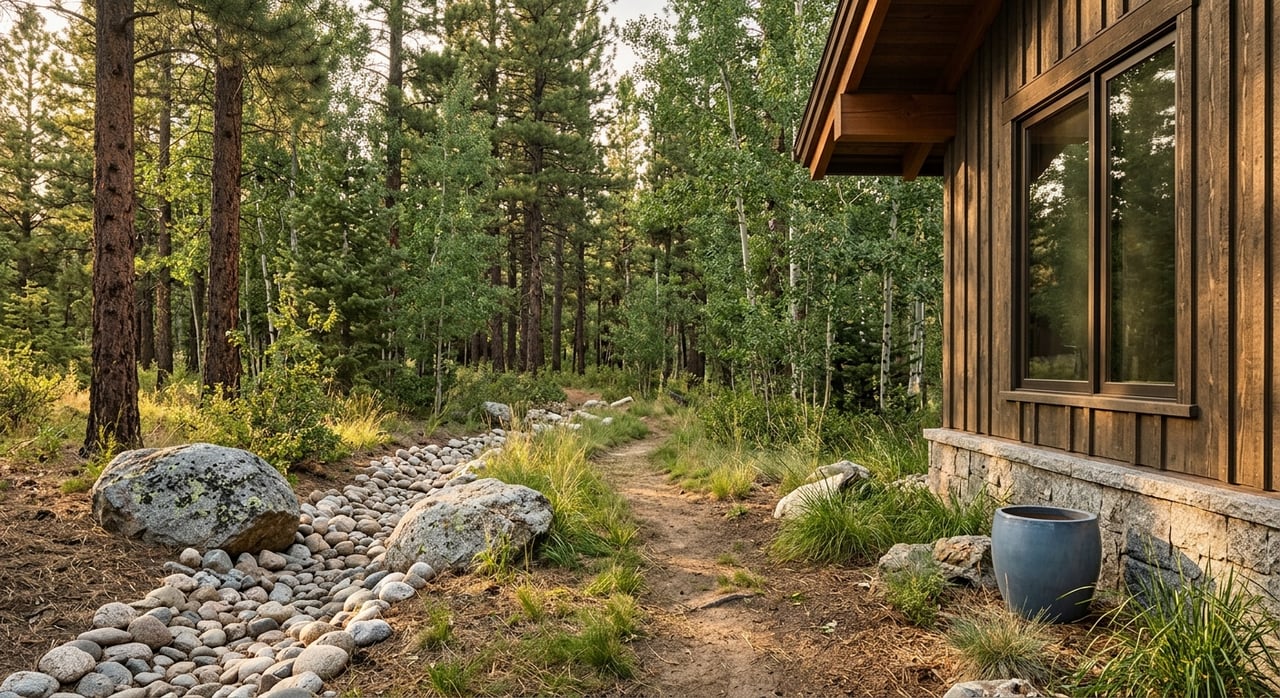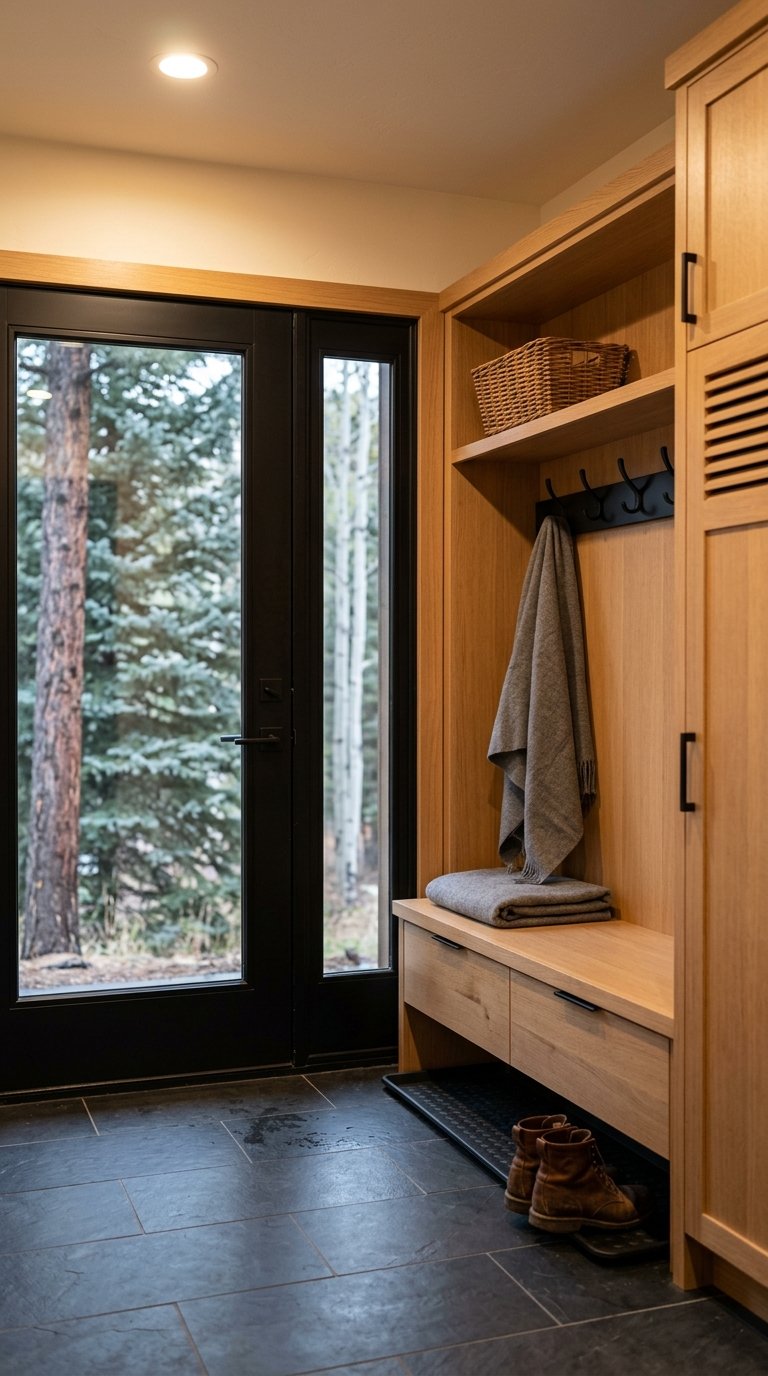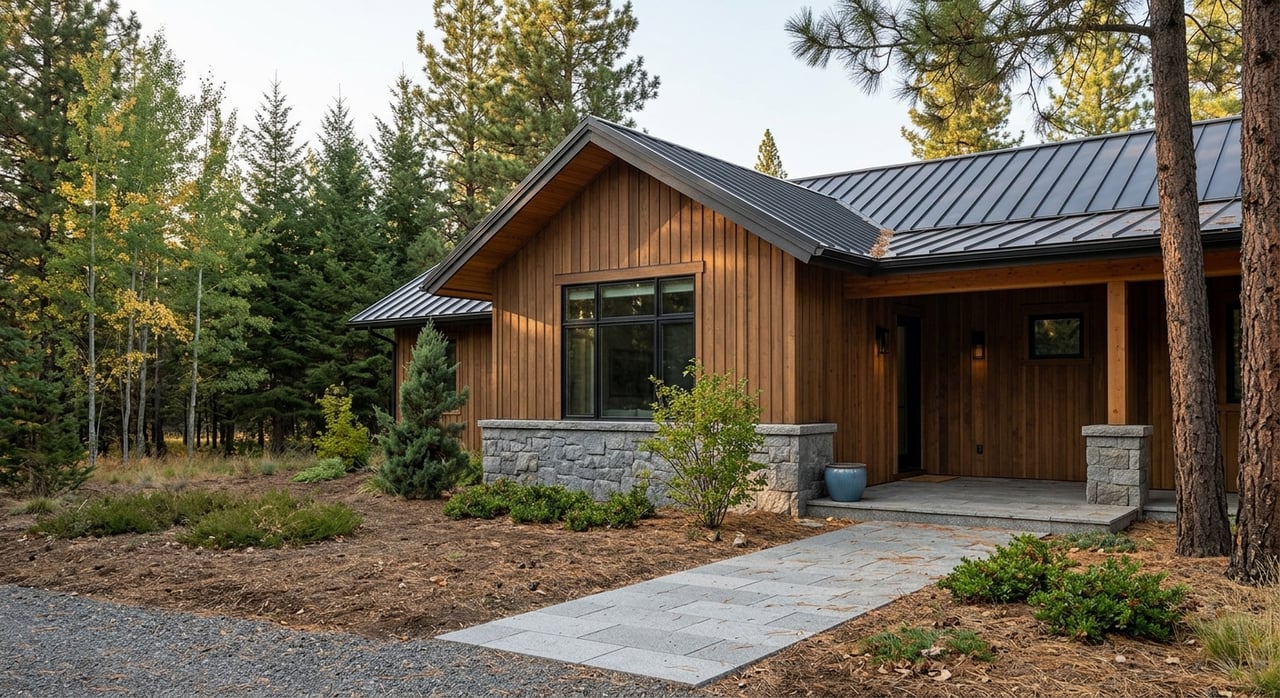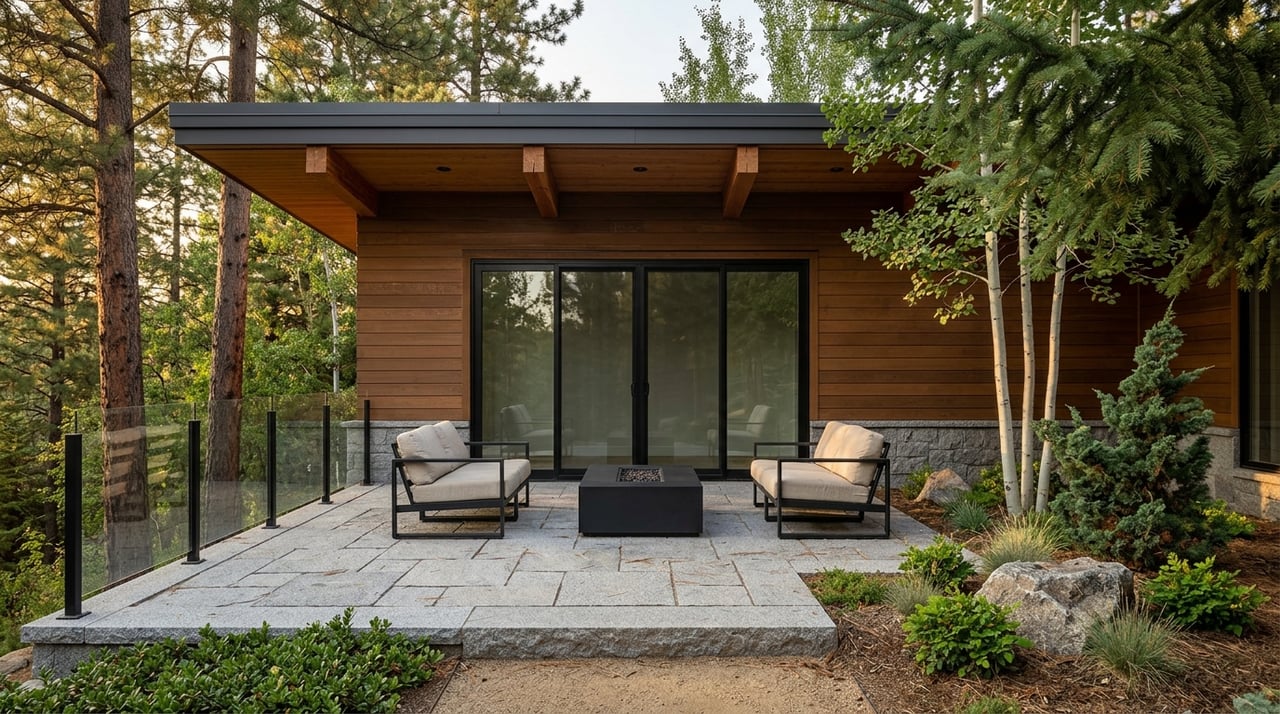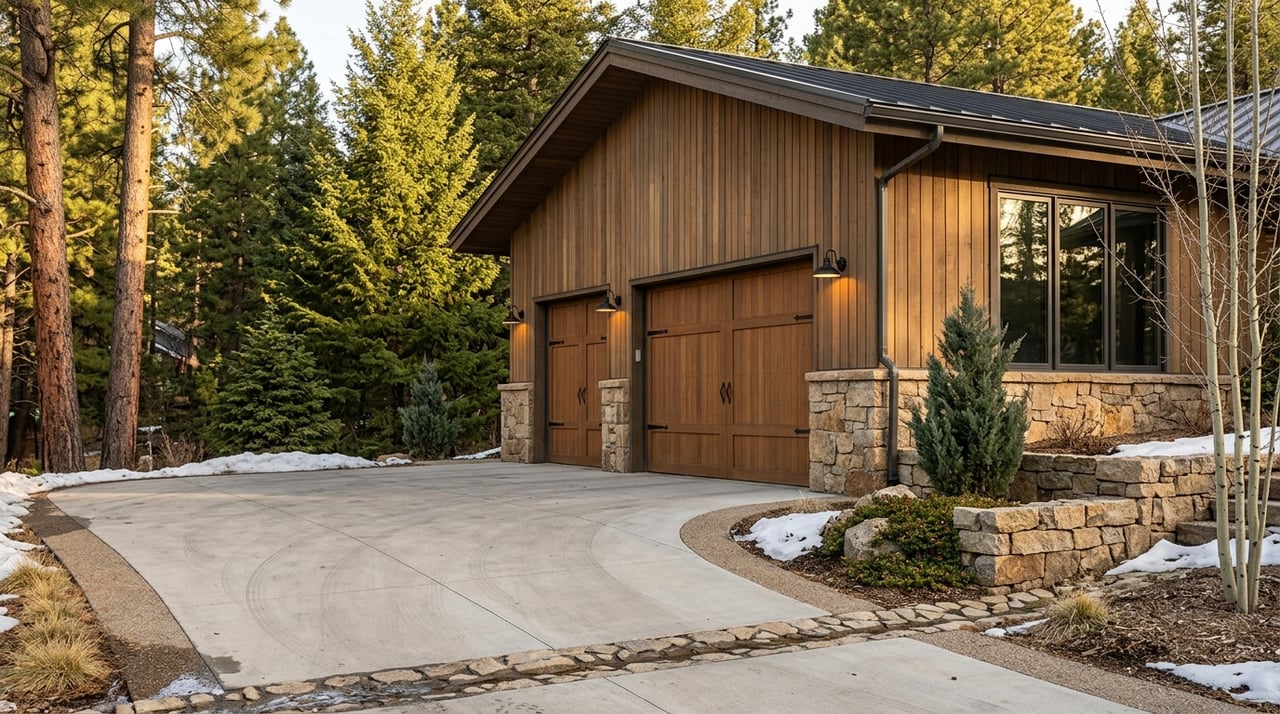
Are you picturing a mountain home with big views and extra elbow room, only to realize the real questions are about the driveway, the slope, the snow, and where you will actually store things? In Evergreen, those details matter just as much as the bedroom count. When you understand how layouts, lots, and site conditions work here, you can make a more confident decision and avoid surprises after closing. Let’s dive in.
Why site matters in Evergreen
Evergreen homes sit in a mountain environment shaped by elevation, weather, and terrain. NOAA climate normals for Evergreen show an average annual snowfall of 80.8 inches at a station elevation of 6,985 feet, along with 18.62 inches of precipitation and a 44.7°F average temperature. That helps explain why roofs, entries, parking areas, and exterior storage deserve close attention.
Jefferson County also notes that snow load can vary by elevation and should be checked by address. In other words, two homes in the same general area may still have different site and design considerations. That makes the exact parcel, not just the mailing address, a key part of your home search.
The Evergreen Area Plan adds another layer. It encourages development that is sensitive to water availability, steep slopes, wildfire, wildlife, transportation, and visual resources. If a lot is steep, it can affect runoff, septic needs, water constraints, and wildfire hazard.
Common mountain home layouts
In Evergreen, floor plans often reflect the land first and the house second. Instead of a flat suburban setup, many homes are designed around grade changes, access points, and the most usable part of the parcel. That is why you will often want to look beyond square footage and focus on how the home lives day to day.
A practical question is where you enter the home. On some properties, the easiest daily entry is from the garage level, while others may have a main-level entry with living space above or below. Lower levels may offer daylight or walkout access, which can make a big difference for storage, guests, pets, or outdoor use.
Jefferson County’s Mountain Residential districts allow single-family dwellings in MR-1, MR-2, and MR-3. Duplex and two-family uses are allowed in MR-1 and MR-2, and accessory garages, mini-structures, and storage sheds are permitted accessory uses. For some acreage properties, certain agricultural-style accessory uses such as private barns and stables may also be allowed where the district permits them.
Lot patterns look different here
Evergreen lots are often larger and more variable than typical suburban parcels. County zoning and planning guidance support lower-density mountain development with more separation and flexibility. That can be a major benefit if you want privacy, outbuildings, or room to spread out, but it also means not every part of a parcel may be equally usable.
The Evergreen Area Plan describes several development patterns. Stability areas generally aim to keep lot sizes the same or larger, while rural-cluster areas can average one dwelling unit per 17.5 acres with lots as small as 5 acres. In steep-slope large-lot areas, development is steered toward the less steep portions of a site.
That matters because a large lot on paper may still have limits in practice. A parcel may include steep sections, tree cover, drainage paths, or constrained areas that shape where you can park, build, store items, or spend time outside. When you compare homes, it helps to ask how much of the lot is truly usable.
Driveways are a major quality-of-life factor
In Evergreen, the driveway can be just as important as the kitchen. A beautiful home can feel very different in winter if access is steep, narrow, hard to turn around on, or difficult to clear after a storm. That is why driveway design deserves real attention during your search.
Jefferson County requires an Access Permit for all new driveways and driveway modifications that take access from a county-maintained road. The county reviews factors such as drainage, culverts, plow operations, and intersection spacing, and Road & Bridge inspects the work before and after completion. Work within 15 feet of public roads, or 25 feet of public arterials, also requires an access permit.
The county’s transportation manual adds that long driveways can require a hammerhead turnaround if they exceed 150 feet. Private streets and roads are also subject to fire-district standards and approval. These are not small details, especially if you are considering a home on acreage or farther off the main road.
Winter access changes daily living
Snow response in the mountains works differently than many buyers expect. Evergreen is served by Jefferson County Road & Bridge District III, which also covers Indian Hills, Genesee, and Lookout Mountain. In winter, the county plows mountain areas in phases rather than treating every road the same way at the same time.
The county also states that driveway approaches are the property owner’s responsibility to clear. It further notes that packed snow and ice are not removed from residential streets if those streets remain passable by passenger cars. For you, that means winter livability depends not only on whether a road is maintained, but also on how your home handles snow once you turn into the property.
When touring homes, ask practical questions like these:
- Is the home on a county-maintained road or a private road?
- Is the driveway steep, curved, or especially long?
- Is there enough room to turn around easily?
- Can the driveway be plowed without much trouble?
- Does the garage placement make winter unloading easier?
Garages, parking, and storage
Mountain living usually comes with more gear and more weather-related storage needs. That can include snow tools, outdoor equipment, seasonal tires, fire-resistant storage planning, and covered space for vehicles. In Evergreen, a good storage setup often feels less like a bonus and more like part of the home’s core function.
County zoning allows accessory garages, mini-structures, and storage sheds in Mountain Residential districts as accessory uses. On the right parcel and in the right district, that flexibility can be valuable. Still, the best setup depends on how the lot handles access, slope, and defensible space requirements.
A detached garage or shed may add useful room, but you will want to look at where it sits on the lot and how easy it is to reach in snow. A large parcel does not automatically mean easy storage expansion. Site layout, grading, wildfire rules, and access can all shape what is practical.
Wildfire rules affect outdoor use
Wildfire planning is part of everyday homeownership in Evergreen. Jefferson County says more than two-thirds of the county falls within a designated Wildfire Hazard Overlay District, and Evergreen and Conifer are among the highest-risk areas. That makes wildfire mitigation a real part of evaluating any mountain property.
Jefferson County’s updated Wildfire Resiliency Code applies to unincorporated properties in the county’s wildland-urban interface and must be enforced by July 1, 2026. The county states that structure hardening is reviewed through building permits, while defensible space is handled through county-approved wildfire mitigation specialists. The code is not retroactive, but it does matter for future permitted work.
Defensible space rules also affect how you use the yard. In the 0 to 5 foot zone, the county prohibits combustible mulch, firewood storage, and new plants. In the 5 to 30 foot zone, it limits hazardous fuels and large surface-fuel accumulations, and in the 30 to 100 foot zone, added spacing rules can apply in higher-risk areas.
That means outdoor storage should be considered early. If you are thinking about where to keep firewood, landscaping materials, or extra equipment, the answer is not just about convenience. It is also about whether the location works with mitigation standards.
Utilities shape layout decisions
In some Evergreen-area properties, the utility conversation is just as important as the floor plan. Jefferson County Public Health notes that in some parts of the county, a substantial number of homes rely on private wells. The county also regulates septic systems as onsite wastewater treatment systems.
Before the sale of a property with a septic system, owners must obtain a use permit and inspection if the system was installed more than five years before the sale date. For buyers, that makes utility service a practical due-diligence item, not just a background detail. You will want to know whether a home is served by public water and sewer or relies on a private well and septic system.
For additions and accessory dwelling units, Jefferson County reviews access, water, wastewater, and fire protection and mitigation during permitting. ADUs also may not be placed in easements or floodplains. If you are buying with future expansion in mind, those site conditions matter from the start.
Slope and grading can limit options
A mountain lot can be beautiful and still come with engineering considerations. Jefferson County notes that floodplain work requires a permit, grading over one-half acre can require a Grading Permit, and retaining walls over three feet must be engineered. Dwellings in geohazard areas may also need soils testing and a geotechnical report.
For you, this means steep terrain can affect both budget and usability. Parking pads, retaining walls, drainage work, and future additions may involve more review than you would expect on a flatter lot. The shape of the land often influences what is easy, what is possible, and what may take more planning.
What to compare when touring homes
When you walk through an Evergreen mountain home, try to evaluate the property as a full system. The view and layout matter, but so do access, utilities, and how the lot functions in every season. A thoughtful comparison now can save you time and stress later.
Here is a simple checklist to use:
- Entry layout: Where will you come in most days?
- Lower level use: Is it walkout, daylight, or fully below grade?
- Road access: County-maintained or private?
- Driveway function: Steepness, width, turning space, and plowability
- Parking: Garage size, guest parking, and winter convenience
- Storage: Attached, detached, shed, or outbuilding options
- Wildfire mitigation: Defensible space and exterior storage limits
- Utilities: Public systems or private well and septic
- Site constraints: Slope, drainage, retaining walls, floodplain, or geohazard concerns
In a market like Evergreen, those practical details are part of what makes a home feel easy to own. They also help you match the property to your daily routine, your long-term plans, and your comfort level with mountain living.
If you want help sorting through the real-world differences between Evergreen homes, working with a broker who understands mountain access, site constraints, and day-to-day livability can make the process much clearer. When you are ready to compare properties with local insight, connect with Alicia Sexton.
FAQs
What makes Evergreen mountain homes different from suburban homes?
- Evergreen mountain homes are often shaped by slope, snow, wildfire mitigation, access, and utility constraints, so the lot and site function matter as much as the interior layout.
What should you ask about an Evergreen driveway?
- Ask whether the home is on a county-maintained or private road, whether the driveway is steep or long, whether it has turnaround space, and how manageable it is after snow.
What utility systems should you check for an Evergreen property?
- You should confirm whether the home uses public water and sewer or relies on a private well and septic system, since that affects inspections, maintenance, and future planning.
How do wildfire rules affect an Evergreen lot?
- Wildfire mitigation can affect defensible space, landscaping, firewood storage, and where outdoor items can be placed, especially close to the home.
Can lot size be misleading for an Evergreen mountain home?
- Yes. A large parcel may include steep slopes, drainage areas, or other constraints, so the usable part of the lot can be more important than the total acreage.
Why is the lower level important in an Evergreen home layout?
- In mountain homes, a lower level may provide daylight or walkout access and can play a big role in daily entry, guest space, storage, and access to the outdoors.