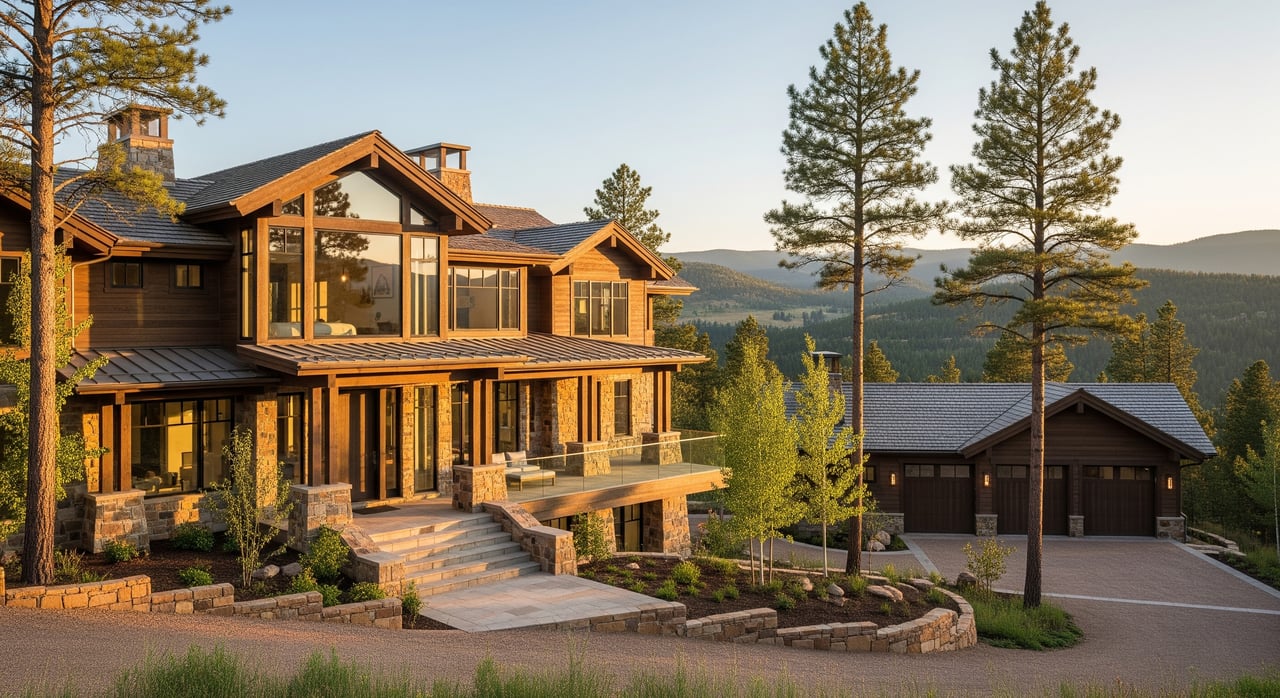
Are you eyeing a mountain home in Evergreen and wondering if your financing will be a jumbo loan? You are not alone. High-demand foothill properties often cross conforming limits, and the rules can feel complex. In this guide, you will learn what counts as a jumbo, how rates and costs usually work, and the mountain-specific factors lenders consider in Evergreen. Let’s dive in.
Jumbo loan basics
A jumbo loan is any mortgage that exceeds the local conforming loan limit published by the Federal Housing Finance Agency. Conforming loans meet standards that allow purchase by Fannie Mae or Freddie Mac, while jumbos are funded and priced directly by lenders or private investors.
Jumbo is a category, not a single product. You can find fixed-rate jumbos, ARMs, portfolio loans, and some non-QM options. Each lender sets its own criteria and pricing, so it pays to compare.
Local threshold: Evergreen and Jefferson County
To know if your loan is jumbo, compare your needed loan amount to the current Jefferson County conforming limit. You can review the latest figures on the FHFA conforming loan limits page. If your required loan amount is above the local limit, you are in jumbo territory. Because Evergreen homes often include acreage, wells and septic, or unique settings, many buyers exceed conforming limits. Confirm your numbers early with your lender.
Qualifying for a jumbo
Jumbo underwriting is usually stricter because lenders hold more risk. Expect a closer look at credit, income, assets, and the property itself.
Credit score
Lenders typically look for higher scores to earn the best pricing. Many competitive jumbo programs favor mid-700s, and some set 740 or higher for top terms. Specialty programs may allow lower scores with higher rates.
Down payment and LTV
Many jumbo loans cap loan-to-value around 80 percent. Some lenders go to 85 to 90 percent with strong compensating factors, such as excellent credit and large reserves. Standard private mortgage insurance is less common in jumbos, so a larger down payment often replaces PMI.
Debt-to-income ratio
A common DTI target is 43 to 45 percent. Some lenders stretch higher, up to 50 percent, when other strengths are present, such as strong reserves.
Cash reserves
Jumbos put more weight on reserves. It is typical to see 6 to 12 months of full mortgage payments in liquid assets. Higher LTVs, second homes, or investment properties may require more.
Income documentation
Plan for full documentation. Recent pay stubs, W-2s, tax returns for the past two years if self-employed, and full bank and asset statements are standard. Large deposits and gift funds need clear paper trails. Some portfolio or non-QM programs allow alternative documentation, but they usually come with tighter rules and higher costs.
Employment history
Most programs expect stable W-2 income or at least two years of consistent self-employment. Gaps and short-term contracts will get extra attention.
Rates, fees, and closing costs
How jumbo rates compare
Jumbo pricing follows each lender’s cost of funds and investor demand. Historically, jumbo rates were higher than conforming, but the spread changes with the market. In some cycles, well-qualified borrowers see rates close to conforming levels. Your profile, loan term, and whether you choose a fixed or ARM will all influence pricing.
For a neutral overview of mortgage types and how lenders evaluate you, review the CFPB’s consumer resources.
Fees and closing costs
Expect similar or slightly higher origination and third-party costs. Appraisals can be more expensive for complex mountain properties, especially when the appraiser needs more time, broader comps, or special expertise. Certain property types may trigger lender overlays, which can affect pricing.
Mortgage insurance
Conventional PMI is not common for jumbo loans. Many lenders prefer larger down payments or custom structures that can raise the effective rate. Ask for a full comparison when you shop.
Mountain property factors in Evergreen
Mountain and foothill homes come with features that matter to lenders and appraisers. Understanding them early can save time and stress.
Limited comps and unique homes
Evergreen has many one-of-a-kind properties. When recent sales nearby are limited, the appraisal may rely on a wider radius with more adjustments. The Appraisal Institute provides context on how unique and rural properties are evaluated.
Access, roads, and maintenance
Private or steep roads, seasonal access, and driveways may affect marketability and insurance. Lenders often ask for proof of legal access and road maintenance agreements, especially outside of county-maintained roads. You can explore county resources through Jefferson County’s official site.
Wells, septic, and inspections
Private wells and septic systems are common and often require specific inspections or performance tests. Lenders may be more conservative on LTV when these systems are present. Plan the inspection timeline with your agent and lender early.
Wildfire risk and insurance
Foothill properties often carry higher wildfire exposure. Insurers may limit coverage or adjust premiums. Get quotes as soon as you go under contract. The Insurance Information Institute explains wildfire and homeowners insurance, and the Colorado Division of Insurance shares state-level guidance and consumer resources.
Snow, elevation, and structure
Snow loads, roof condition, drainage, and hillside stability can factor into underwriting on older or unique builds. An engineer’s report may be requested if there are concerns.
Condos and HOAs
Some mountain-area condos are non-warrantable under standard agency rules. Jumbo lenders often apply stricter reviews to the building and the HOA’s finances. Expect higher down payment requirements in these cases.
Appraisals and contingencies in the foothills
Appraisers may reach to adjacent foothill communities for comparable sales. Some lenders ask for a second or hybrid appraisal in complex cases. If value comes in low, you can renegotiate price, increase your down payment to cover the gap, request a second appraisal if allowed, or exit under an appraisal contingency. Talk through appraisal gap strategies with your agent before you write an offer.
Evergreen jumbo buyer checklist
Use this quick list to prepare for a smoother process.
- Confirm whether your loan will be jumbo by checking the FHFA conforming loan limits for Jefferson County and comparing with your planned down payment.
- Interview lenders with jumbo and mountain-property experience. Ask about wells, septic, wildfire insurance, and non-warrantable condos.
- Get full pre-approval, not just pre-qualification. Share recent pay stubs, W-2s, two years of tax returns if self-employed, and full asset statements.
- Build reserves. Aim for 6 to 12 months of mortgage payments in liquid assets.
- Optimize credit. Higher scores often mean better jumbo pricing.
- Plan your down payment strategy. Many buyers target 20 percent or more for strong terms.
- Anticipate appraisal complexity. Budget for higher appraisal costs and discuss appraisal gap options.
- Shop insurance early. Get hazard and wildfire quotes right away and ask about mitigation steps.
- Order specialty inspections as needed. Well yield tests, septic inspections, and structural reviews can be essential in the foothills.
- Align contingency language. Coordinate with your agent on appraisal, loan, and inspection timelines that fit jumbo underwriting.
- Consider alternatives. Portfolio or non-QM loans and bridge financing may help in certain situations, each with trade-offs.
- Coordinate with local pros. Choose a lender and agent who know Jefferson County processes and mountain property norms.
Get local guidance you can trust
Jumbo financing is very doable in Evergreen when you plan ahead. With the right lender, a complete pre-approval, and an agent who understands wells, septic, access, wildfire insurance, and appraisal dynamics, you can move forward with confidence.
If you are considering a jumbo purchase in Evergreen or the nearby foothills, let’s connect and map out a clear plan. Reach out to Alicia Sexton for local, mountain-smart guidance tailored to your goals.
FAQs
Are jumbo mortgage rates always higher than conforming rates?
- Not always. The spread changes with market conditions and borrower strength, and well-qualified buyers sometimes see rates close to conforming levels.
Can I get a jumbo loan for a non-warrantable condo in Evergreen?
- Many lenders restrict non-warrantable condos. Some portfolio lenders may offer options, usually with higher down payments, stricter terms, or higher rates.
How many cash reserves do I need for a mountain-area jumbo purchase?
- A common range is 6 to 12 months of mortgage payments, with more possible for higher LTVs, second homes, or complex properties.
What happens if the appraisal comes in below the purchase price on a jumbo loan?
- You can renegotiate price, bring more cash to cover the gap, request a second appraisal if allowed, or cancel if your contract has an appraisal contingency.